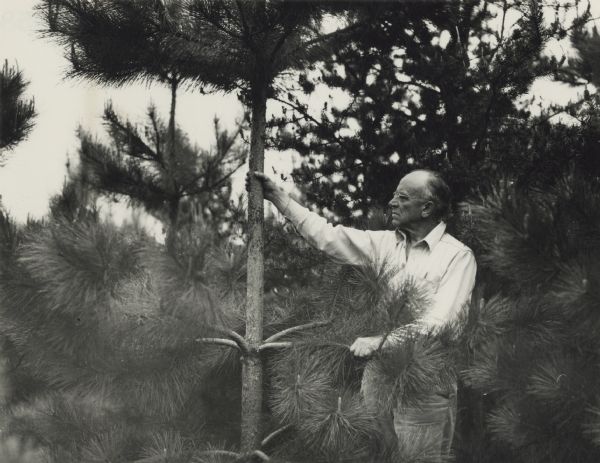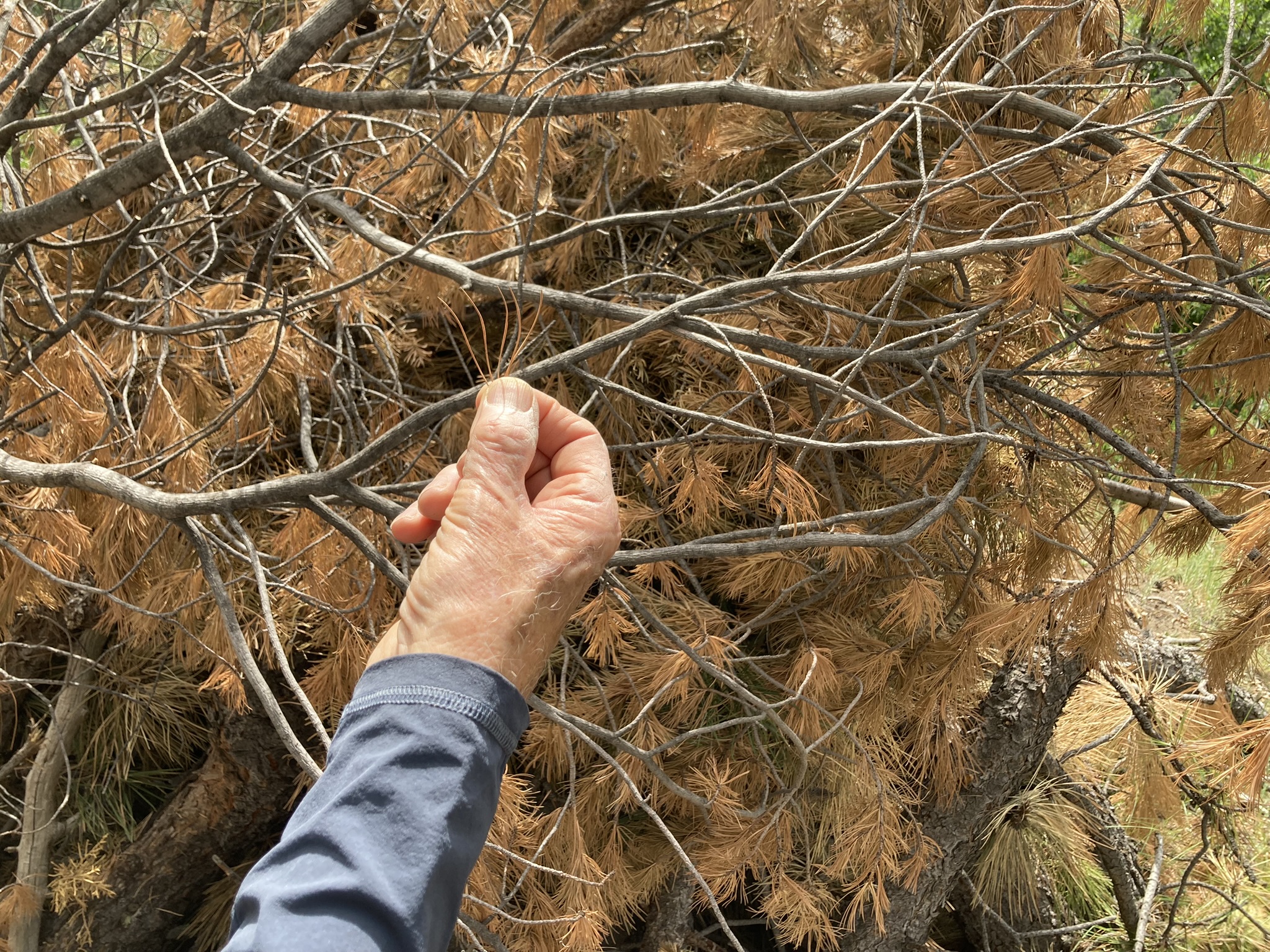
Rare white pines in the Southwest are under siege. In addition to threats from a deadly disease and the rapidly warming climate, a unique population of these graceful pines in northern New Mexico is being cutting down under the pretext of preventing wildfires. There is one person with the power to change things.
Shaun Sanchez, the current head of the 1.5 million acre Santa Fe national forest, grew up in the forests he now manages. When these forests were massively charred by an intentional burn that went awry in 2022, he was hired away from the U.S. Fish and Wildlife Service to restore Forest Service credibility in the land of his youth.
Then the political headwinds shifted to make white pine survival in the Southwest an obscure side issue. At the same time, the Santa Fe national forest was hit with Trump’s staffing cuts, losing up to 80 percent of some programs.
White pine blister rust is an exotic disease introduced to North America from Europe in the early 1900s. It has nearly eliminated the majestic western white pine in the northern Rockies and is the principle reason in 2022 that the high-elevation white bark pine was listed as threatened under the Endangered Species Act. Southwestern white pine, a cousin to the listed whitebark pine, could soon join the endangered ranks.
The good news is that natural disease resistance is high in trees grown from seed collected in New Mexico’s Lincoln, Cibola and Santa Fe national forests. After 7.5 years of experimental exposure to blister rust spores, three populations had a greater than 70% survival rates representing perhaps the highest level of resistance documented to date in a North American white pine species.
Also, white pines appear to be adapting to the warming climate. Closely related Southwestern white pines (Pinus strobiformis) and limber pine (Pinus flexilis) are hybridizing and moving north. This expanding hybrid zone combines limber pine’s greater cold tolerance with Southwestern white pine’s ability to better withstand drought.
Natural adaption is lost, of course, when forests are cleared of “fuel.” Removing white pines to prevent fires echoes the tragic loss of American Chestnuts to chestnut blight in the 1920s when the remaining genetically resistant “redwoods of the east” were cut down for their valuable wood. Closer to home, rust resistant western white pines were similarly removed from the forests of Idaho and Montana for their economic value when the Forest Service accelerated logging in the 1960s.
For land managers these days doing what’s right means standing up to bullies. The question is — can one man find the moral courage in a corrupt world to save a beautiful tree from extinction? Maybe, if we have his back. Let him know: Shaun.Sanchez@usda.gov.